Drive the car every 3 days, place peppermint sachets in the engine bay, install LED rodent deterrent lights, set snap traps near the parking spot, seal entry points with steel wool, and apply rodent deterrent tape to wiring.
A field mouse weighs less than a quarter and squeezes through holes the size of a dime. The same mouse drops $3,200 in wiring damage on a 2017 Subaru Outback in Madison, Wisconsin during one November weekend. Knowing how to keep mice out of car engine spaces before you find shredded insulation separates the $50 prevention strategy from the four-figure repair invoice.
What Makes Mice Different From Other Engine Bay Pests
Mice are smaller, more numerous, and harder to deter than larger rodents like squirrels or rats. The most common species damaging vehicles include the deer mouse, white-footed mouse, and house mouse, all of which thrive in suburban and rural environments across America.
A typical adult mouse weighs 0.5 to 1 ounce and measures 3 to 4 inches in body length. The animals can squeeze through any opening larger than 1/4 inch, climb vertical surfaces, jump 12 inches vertically, and chew through wire insulation in seconds.
Mice reproduce rapidly with a female producing 5 to 10 litters per year of 4 to 12 pups each. A single pair of mice can become 60 to 100 mice in a year if conditions support reproduction.
Modern vehicles use soy-based wiring insulation introduced by manufacturers like Toyota, Honda, Subaru, Tesla, and Hyundai since 2012. The plant-based material attracts mice because it smells appealing and may even taste like food.
Warning Signs Mice Have Moved Into Your Engine Bay
Visual evidence appears within days of mouse occupation. Catching the signs early prevents major damage and infestation expansion.
Small Black Or Brown Droppings In The Engine Bay
Mouse droppings are 1/8 to 1/4 inch long, dark brown to black, and pointed at the ends. The droppings appear scattered on engine surfaces, in the air filter housing, on top of the battery, or along the firewall.
A 2018 Honda CR-V in Madison, Wisconsin with droppings on the engine cover indicates active mouse traffic. The droppings carry diseases including hantavirus, leptospirosis, and salmonella. Always wear nitrile gloves and use disinfectant when cleaning. Never use compressed air to blow droppings because aerosolized particles cause infection.
Nesting Material Made Of Insulation And Fabric
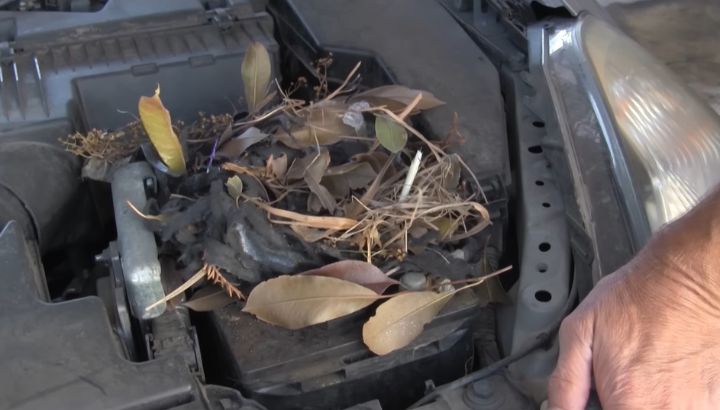
Mice build nests from any soft material they can find, including engine bay sound insulation, fabric pieces, leaves, paper, and chewed-up wiring insulation. The nests appear in sheltered locations like cabin air filter housings, on top of the engine cover, or stuffed into corners.
Vehicles parked in barns or rural areas often have mice using insulation from old farm buildings or stored materials. The nest material often contains pet hair, dryer lint, and other items mice transport from nearby buildings.
Chewed Wiring And Hose Damage
Visible chew marks on wiring harnesses, vacuum hoses, or rubber components indicate active mouse damage. Mouse teeth grow continuously, and the animals must chew constantly to keep teeth filed.
Modern vehicle wiring shows fresh damage as bright copper exposed under stripped insulation. Older damage shows oxidized green-brown copper. Honda, Toyota, and Subaru vehicles built after 2012 with soy-based insulation show particularly high rates of chew damage.
Stored Food Like Seeds And Pet Kibble
Caches of bird seed, pet food, grass seed, or stored grain in unusual engine bay locations indicate mouse food storage. The caches may contain dozens of seeds in air filter boxes, behind the battery, or in body cavities.
A driver in rural Iowa finding stored corn kernels under the hood has provided mice with both shelter and food storage space. The combination of warmth, shelter, and food makes the location ideal mouse habitat.
Strange Smells From Vents Or Engine Bay
A musky urine smell from the engine bay or coming through cabin vents indicates active mouse populations. Mouse urine has a distinctive ammonia odor that becomes stronger as populations grow.
The smell may appear in the cabin when the air conditioner or heater fan runs because the cabin air filter housing is a popular nesting location. A 2016 Hyundai Sonata with musky vent smells often has nests in the cabin air filter housing accessible behind the glove compartment.
What These Signs Tell You About The Problem Severity
The pattern of evidence reveals whether you have a casual visitor or an established population. Different problems require different responses.
Single Set Of Droppings Suggests Recent Visit
A small concentration of droppings in one area suggests a single mouse has visited recently but may not have established residence yet. The early intervention is easier than addressing established populations.
The fix at this stage is removing the food and applying deterrents before the mouse returns. Cleanup, peppermint sachets, and a snap trap near the area prevents establishment. Total cost runs $20 to $40 for prevention at this early stage.
Multiple Droppings Across Different Locations
Droppings scattered across multiple engine bay locations indicate active habitation by one or more mice. The animals are using the engine bay as a regular travel route or temporary shelter.
The fix requires aggressive prevention combining trapping, deterrents, and access control. Mouse populations grow quickly, so 2 to 3 days of delay can convert a manageable problem into a serious infestation. Total cost runs $50 to $100 for comprehensive intervention.
Active Nest Building Indicates Established Population
A constructed nest with shredded materials means a mouse has decided to live in your vehicle. Females build nests for upcoming litters, meaning more mice will follow within weeks.
The fix requires nest removal, professional-grade traps, and complete environmental modification. Tomcat Snap Traps at $5 each kill effectively. Live trapping with Havahart Traps at $30 to $60 allows relocation but takes longer.
Multiple Generations Visible
Evidence of mice of different sizes, varying age droppings, and multiple nest sites indicates breeding population. Several generations are now using your vehicle as habitat.
This level requires professional pest control intervention. Terminix, Orkin, or local independents can address infestations at $300 to $1,500 per service. The complexity exceeds DIY effective control. Owners who try to manage breeding populations alone usually fail.
How To Diagnose Your Specific Mouse Situation
A 10-minute inspection tells you the problem severity and points to the right intervention level. Skipping diagnosis often leads to over-treating minor issues or under-treating serious ones.
Inspect The Engine Bay With A Bright Flashlight
Open the hood and use a bright LED flashlight to inspect every surface of the engine bay. Look for droppings, nesting material, chew marks, and food caches. Take phone photos of any findings for later comparison.
The systematic inspection should cover the top of the engine, the air filter housing, around the battery, along the firewall, behind the engine cover, and into corners and crevices.
Check The Cabin Air Filter Housing
Open the cabin air filter access panel, usually behind the glove compartment, and inspect the filter and housing. Mice often use this space because it stays dry and offers excellent shelter.
A cabin filter housing with droppings, nesting material, or chewed filter material requires complete cleanup before any deterrents will work. Cabin air filter replacement costs $15 to $30 for the part plus 10 minutes of installation time.
Examine Wiring Harnesses With A Magnifying Glass
Inspect visible wiring harnesses with a magnifying glass and bright light. Look for nibble marks, partial chew damage, and exposed wires. Modern soy-based insulation often shows damage that older petroleum insulation would not.
Critical wiring near the throttle body, fuel injectors, oxygen sensors, and engine control module deserves the closest attention. Damage in these locations causes immediate vehicle problems requiring expensive repair.
Use Tracking Powder To Confirm Activity
Sprinkle non-toxic baking flour or talcum powder in the engine bay and check 24 to 48 hours later for footprints. Mice leave clear tracks in fine powder, confirming whether activity is ongoing.
The tracking technique is particularly useful when you are unsure if your prevention measures are working. Active footprints mean mice are still entering despite deterrents. Clean powder confirms successful prevention.
Check For Mouse Activity At Night
Set up a phone camera or trail camera near the parked vehicle to record overnight activity. Mice are nocturnal and most active between 10 PM and 4 AM.
The video evidence reveals whether mice are actively visiting and through which paths they enter. Trail cameras from Bushnell or Wildgame Innovations at $50 to $150 work well for this purpose.
Step By Step Walkthrough To Mouse-Proof Your Engine Bay
Effective mouse prevention requires a layered approach combining habitat modification, repellents, traps, and physical barriers. Single methods rarely succeed against established populations.
Step 1: Clean Out All Existing Evidence Thoroughly
Remove all droppings, nesting material, food caches, and damaged components from the engine bay. Wear nitrile gloves and a dust mask because mouse droppings carry diseases.
Use a shop vacuum with a HEPA filter to remove debris without aerosolizing particles. Disinfect surfaces with Lysol Disinfectant Spray or 10 percent bleach solution. Total cleanup time runs 30 to 60 minutes for a moderate problem.
Step 2: Apply Peppermint Oil And Strong Scent Deterrents
Place 4 to 8 peppermint oil sachets throughout the engine bay including near the battery, on the engine cover, in the air box area, and along the firewall. Mice hate peppermint and avoid heavily scented areas.
Commercial products like Mighty Mint Rodent Repellent at $25 a package, Fresh Cab at $30 for a 4-pack, or Earthkind Stay Away Rodent Repellent at $20 work effectively. DIY versions using cotton balls soaked in pure peppermint essential oil cost $5 to $10. Refresh sachets every 30 days.
Step 3: Install Rodent Deterrent Lights And Sound Devices
Install motion-activated LED rodent deterrent lights that flash with movement and create environments mice avoid. Solar Rodent Repeller lights at $25 to $50 require no wiring and last years.
Ultrasonic devices like Cleanrth Advanced Rodent Repeller at $80 use high-frequency sound that disturbs mice. The combination of light and sound creates an unpredictable environment small animals find threatening.
Step 4: Set Snap Traps Around The Parking Area
Place 6 to 12 Tomcat Snap Traps at $5 each in the parking area, near the vehicle, and along walls or fences mice would travel along. Position traps perpendicular to walls because mice run along edges.
Bait traps with peanut butter, chocolate, or specialized mouse bait. Check daily and reset triggered traps. Catching 5 to 10 mice in the first week of trapping is normal in active areas.
Step 5: Apply Rodent Deterrent Tape To Critical Wiring
Wrap critical wiring harnesses with rodent-deterrent tape containing capsaicin. Honda Rodent Deterrent Tape at $25 a roll, Toyota Rodent Wire Tape, or aftermarket versions like Rodent Tape from various suppliers work effectively.
Wrap tape around wiring near the throttle body, oxygen sensors, fuel injection components, and any visible chew damage. The capsaicin causes mice to spit out the wire after their first attempt. Reapply tape every 2 to 5 years or when damage shows.
Step 6: Block Entry Points With Steel Wool And Copper Mesh
Stuff steel wool or copper mesh into any openings larger than 1/4 inch where mice could enter the engine bay. Mice cannot chew through metal fibers, making this a permanent barrier.
Common entry points include the lower engine bay, around headlights, near the firewall, and through wheel wells. Steel wool from Home Depot, Lowe’s, or any hardware store costs $5 to $15 per pack. Copper mesh from rodent control suppliers at $20 to $40 lasts longer than steel wool.
Step 7: Drive The Vehicle Regularly To Disturb Habitat
Drive the vehicle at least every 3 days, even just around the block. Regular movement, vibration, and engine heat make the space less attractive for nest building.
Cars sitting unused for a week or more become mouse real estate quickly. A 30-minute drive every few days disturbs nest building and drives mice elsewhere. Vehicles in storage need monthly drive cycles at minimum.
Step 8: Eliminate Food Sources And Hiding Places Nearby
Remove pet food left outside, eliminate accessible bird seed, secure garbage in mouse-proof containers, and clear brush or junk piles within 20 feet of the vehicle. Reduced food and shelter forces mice to forage elsewhere.
A homeowner in Athens, Ohio who eliminates a brush pile within 15 feet of his driveway parking spot typically sees a 60 to 80 percent reduction in mouse activity. Long-term mouse control requires environmental management, not just deterrents.
Real Driveway Story From An Owner In Madison
A reader with a 2018 Subaru Outback at 78,000 miles in Madison, Wisconsin discovered her car would not start one November morning. The mechanic diagnosis revealed extensive mouse damage to the wiring harness affecting the engine control module and several sensors.
The repair quote came in at $3,400 because the Subaru wiring harness had to be replaced rather than repaired. Her insurance covered the damage under comprehensive coverage with a $500 deductible, leaving her out $500 plus 5 days without her vehicle.
She implemented a comprehensive prevention strategy after the repair. The investment included Mighty Mint Rodent Repellent sachets at $25, a Solar Rodent Repeller light at $35, Tomcat Snap Traps at $24 for a 6-pack, Honda Rodent Deterrent Tape at $25, and steel wool blocking at $8.
Total prevention cost was $117 plus 2 hours of installation time. She also moved her bird feeders 50 feet from her parking spot and started parking in her detached garage when temperatures dropped below 40°F.
The next 18 months passed without any mouse damage. She catches 1 to 2 mice per month in the snap traps near her parking area, providing measurable evidence the population pressure exists but is being controlled. Her annual prevention cost averages $40 in trap bait and sachet refresh.
When DIY Prevention Will Not Be Enough
Some mouse problems exceed DIY capabilities and require professional intervention or major environmental changes. Knowing the limits prevents wasted effort.
Active Breeding Population Already Established
A vehicle with multiple generations of mice, breeding females with pups, and continuous new arrivals despite trapping has an established population that DIY methods cannot eliminate quickly. The reproductive rate exceeds your ability to remove individuals.
Professional pest control services can address breeding populations through coordinated trapping, baiting, and exclusion at $300 to $1,500 per service. The intervention typically resolves the immediate vehicle issue within 2 to 4 weeks.
Severe Damage Requiring Professional Repair
Damage extending to multiple major wiring harnesses, transmission control wiring, or the engine control module requires professional repair before prevention can be effective. Continuing to drive with damaged critical wiring causes additional issues.
Professional wiring repair runs $500 to $5,000 depending on extent. Some repairs require complete harness replacement at $2,000 to $5,000. Always fix existing damage before relying on prevention to stop new problems.
Storage Or Long-Term Parking Situations
Vehicles stored for extended periods face mouse pressure that exceeds normal prevention capabilities. Project cars, RVs, and seasonal vehicles need specialized storage approaches beyond simple deterrents.
Indoor heated storage at $50 to $200 per month eliminates most pest issues. Car covers with rodent-deterrent properties at $80 to $300 provide modest protection. Active rodent traps inside the engine bay during storage offer the best prevention.
Rural Properties With Heavy Pest Pressure
Rural properties with barns, sheds, woodpiles, and agricultural fields face mouse populations that overwhelm normal prevention. Rural drivers in Vermont, Ohio, Iowa, Indiana, and similar regions often need aggressive ongoing intervention.
A reader in rural Vermont with neighbors all facing similar issues may need indoor heated garage storage as the only reliable solution. The construction cost of $15,000 to $40,000 for a heated detached garage pays back through avoided repair costs over 15 to 20 years.
Symptom To Cause To Fix Reference Table
| Specific Symptom | Most Likely Cause | Action Required | Cost Range |
|---|---|---|---|
| Few droppings, no other damage | Recent mouse visit | Clean and apply deterrents | $25 to $50 |
| Nest with shredded materials | Active established mouse home | Remove nest, set traps, prevent | $50 to $150 |
| Chewed wiring with bright copper | Active wire damage | Repair wires, apply deterrent tape | $100 to $1,500 |
| Multiple generations of droppings | Breeding population | Professional pest control needed | $300 to $1,500 |
| Mouse smell through cabin vents | Nest in cabin filter housing | Replace filter, deep clean, prevent | $50 to $150 |
| Engine won’t start | Critical wiring chewed | Diagnose, repair, then prevent | $500 to $5,000 |
| Stored food in air box | Food storage by mice | Empty box, replace filter, deter | $30 to $100 |
| Cabin air filter shredded | Active habitation | Replace filter, prevent reinfestation | $20 to $80 |
| Tracks in tracking powder | Active recent visits | Continue and intensify prevention | $30 to $100 |
| Vehicle stored for months | Habitat formation opportunity | Indoor storage or aggressive prevention | $50 to $300 |
Tools And Products For Mouse Prevention
Effective mouse control requires a small toolkit used consistently. Buying once and applying regularly delivers the best results.
Peppermint Oil Sachets
Mighty Mint Rodent Repellent at $25 per package provides concentrated peppermint oil sachets that deter mice for 30 to 60 days. The packaging makes installation easy throughout the engine bay.
Fresh Cab at $30 for a 4-pack uses balsam fir oil with similar effectiveness. Stay Away Rodent Repellent by Earthkind at $20 offers a third commercial option. DIY versions using cotton balls and pure peppermint essential oil cost $5 to $10 and work nearly as well.
Snap Traps For Lethal Control
Tomcat Snap Traps at $5 each kill effectively and are easy to set. Victor Original Wood Snap Trap at $4 each is a classic that has worked for over 100 years.
Better Mousetrap by Intruder at $10 for a 6-pack uses a clamshell design that kills humanely and contains the mouse for easy disposal. Set 6 to 12 traps for active control. Bait with peanut butter, chocolate, or specialized mouse bait.
Live Traps For Humane Removal
Havahart Live Trap at $30 to $60 captures mice without killing them. The trap allows release at distance from the vehicle.
Live trapping is more time-consuming but appeals to owners who prefer non-lethal control. Release at least 1/4 mile from the vehicle to prevent return. Some studies suggest released mice often die anyway from competition with established populations.
Rodent Deterrent Lights
Solar Rodent Repeller lights at $25 to $50 use motion-activated flashing to deter mice. The solar power eliminates wiring and battery replacement.
Higher-end ultrasonic devices like Cleanrth Advanced Ultrasonic Rodent Repeller at $80 use sound to deter rodents but may have limited effectiveness in real-world conditions. Some premium combination devices use both light and ultrasonic at $100 to $150 with better results.
Comparison Of Mouse Control Methods
| Control Method | Cost | Effectiveness | Maintenance | Best Use Case |
|---|---|---|---|---|
| Peppermint sachets | $20 to $30 monthly | Moderate | Replace every 30 days | First defense, low pressure |
| Snap traps | $25 to $50 | High lethal control | Check and reset daily | Active populations |
| Live traps | $30 to $60 | Moderate humane control | Check daily, release | Owners preferring non-lethal |
| Rodent deterrent lights | $25 to $80 | Moderate | Solar, low maintenance | Garage and driveway |
| Rodent deterrent tape | $25 per car | High on protected wiring | 2 to 5 year replacement | Vehicles with damage |
| Steel wool blocking | $5 to $15 | High at sealed points | Replace when rusted | Specific entry control |
| Bait stations | $20 to $50 | High but slow | Replace bait quarterly | Outdoor mouse population |
| Ultrasonic devices | $40 to $150 | Variable | Power required | Indoor or covered storage |
| Commercial repellent spray | $15 monthly | Moderate | Reapply every 30 days | Perimeter protection |
| Professional pest control | $300 to $1,500 | Very high | Quarterly service | Severe infestations |
Mistakes That Make Mouse Problems Worse
Several common reactions to mouse activity actually make problems worse or create additional issues. Avoiding these mistakes saves money and frustration.
Using Glue Traps That Cause Suffering
Glue traps cause prolonged suffering and are illegal or restricted in some states. Mice caught in glue traps often die slowly from dehydration, starvation, or self-inflicted injuries trying to escape.
The glue traps also catch non-target animals including birds, lizards, and pets that contact the surface. Snap traps kill humanely and quickly. Live traps allow humane relocation. Both alternatives are more effective and humane than glue traps.
Using Poison Bait Where Pets Or Wildlife Can Access
Rodenticide poisons like brodifacoum or bromadiolone cause secondary poisoning when predators eat poisoned mice. Hawks, owls, foxes, and family pets can die from secondary exposure.
The poisons also cause prolonged death over 4 to 7 days, during which poisoned mice may die in hidden locations creating odor problems. Use snap traps instead. Some states have banned consumer access to certain rodenticides for these reasons.
Ignoring Damage While Adding Deterrents
Applying deterrents to a vehicle with active wiring damage does not fix the existing damage. The chewed wires continue to fail or develop secondary problems even after mice are eliminated.
Always repair existing damage before relying on prevention to stop new problems. Address both issues together for the best outcome. Skipping repair leads to mysterious vehicle problems that drivers blame on prevention failure when the actual cause was unaddressed existing damage.
Single-Method Prevention
Single-method mouse prevention rarely works long-term. Mice adapt to any single deterrent over time, requiring rotation or combination strategies.
Combine 4 to 5 methods for best results. Peppermint sachets plus snap traps plus deterrent tape plus regular driving plus environmental control offers significantly better protection than any single method alone.
Using Mothballs In The Engine Bay
Mothballs contain naphthalene or paradichlorobenzene which are toxic to humans and pets at deterrent levels. The effective concentration also corrodes metal components and damages rubber and plastic.
The chemicals create cabin air quality issues and may cause headaches, nausea, or respiratory problems for vehicle occupants. Use proper rodent deterrents instead. The cost difference between mothballs and proper deterrents is small compared to the safety and material protection.
How To Build A Permanent Mouse Prevention Routine
Effective long-term prevention becomes a habit rather than a crisis response. The investment in regular maintenance prevents major problems.
Inspect The Engine Bay At Every Oil Change
A 5-minute engine bay inspection at every oil change catches mouse activity early. Look for droppings, nesting material, food storage, and chew marks on wiring.
The 5,000 to 7,500-mile interval between oil changes provides regular inspection opportunities. Catching problems early prevents major damage. Document findings with phone photos to track changes over time.
Refresh Deterrents Monthly During High-Risk Season
Mouse pressure peaks from October through April in most regions. Monthly refresh of peppermint sachets, deterrent sprays, and trap bait during this period maintains effectiveness.
A simple calendar reminder for the first Saturday of each month creates a maintenance routine that prevents seasonal problems. The 15-minute monthly investment costs $25 to $50 and prevents thousands in potential damage.
Park Strategically When Possible
Park in a garage when possible. If garage parking is unavailable, park in open areas away from buildings, brush, or other sheltered spots that provide mouse access paths.
A driver in suburban Cincinnati, Ohio who parks 20 feet from the garage in the open driveway typically sees less mouse activity than parking against the garage wall. The simple parking change costs nothing and works immediately.
Drive Stored Vehicles Regularly
Vehicles that sit unused need regular driving to prevent habitat formation. Drive at least every 3 days during high-risk seasons, with 15 to 30 minutes of operation to fully warm the engine.
Stored project cars, RVs, and seasonal vehicles benefit from monthly drive cycles even in low-risk seasons. The fuel cost is minimal compared to repair cost from mouse damage during long storage.
Frequently Asked Questions
What Is The Best Mouse Repellent For Car Engines?
The best mouse repellent for car engines combines multiple methods rather than relying on any single product. Mighty Mint Rodent Repellent sachets at $25 work as the foundation deterrent, supplemented by Honda Rodent Deterrent Tape at $25 on critical wiring and Tomcat Snap Traps at $5 each near the parking area.
Single-product approaches rarely provide reliable protection because mice adapt to any individual deterrent. The combined approach of peppermint scent plus capsaicin tape plus active trapping plus environmental modification handles 90+ percent of mouse problems. Monthly maintenance costs $30 to $50 ongoing, far less than the $500 to $5,000 cost of repairing mouse damage.
How Do I Know If Mice Are Living In My Car Engine?
You know mice are living in your car engine when you find specific evidence including droppings, nesting material, chewed wiring, stored food, or musky urine smells. The presence of multiple types of evidence indicates established habitation rather than casual visits.
Inspect the engine bay weekly during fall and winter using a bright flashlight. Check the cabin air filter housing behind the glove compartment because mice often nest there. Listen for scratching sounds from the engine bay. The 5-minute inspection catches problems early when intervention is easier and cheaper.
Will Driving My Car Daily Keep Mice Away?
Driving your car daily significantly reduces mouse activity but does not completely prevent visits. The regular movement, vibration, and engine heat make the space less attractive for nest building, but determined mice may still establish habitation if no other deterrents are present.
A 15 to 30 minute drive every 1 to 3 days disturbs developing nests and warms the engine bay enough to push out comfort-seeking mice. The fuel cost is minimal compared to mouse damage repair. Combine regular driving with peppermint deterrents, traps, and environmental control for comprehensive protection.
Are Dryer Sheets Effective Against Mice In Cars?
Dryer sheets have limited effectiveness against mice and should not be the primary deterrent strategy. The strong scent provides minor deterrent effect but lacks the proven repellent properties of peppermint oil or capsaicin-based products.
Dryer sheets like Bounce or Snuggle cost $0.10 each, making them inexpensive supplements to other deterrents. Place 6 to 8 sheets in the engine bay alongside peppermint sachets for combined effect. Replace dryer sheets every 30 to 45 days as scent fades. The folk remedy works in a small percentage of cases but should not replace proven deterrents.
Can Mice Get Into A Car With The Hood Closed?
Mice can absolutely get into a car with the hood closed because the engine bay has many openings designed to allow air, drainage, and clearance for moving parts. Mice squeeze through any opening larger than 1/4 inch.
Common entry points include the lower engine bay, around the headlights, through the firewall openings for wiring and pedals, and around the cabin air intake. Even a closed hood provides only minimal barrier against mice. Effective prevention requires sealing specific entry points with steel wool while applying deterrents throughout the engine bay.
How Much Does Mouse Damage To A Car Cost To Repair?
Mouse damage to a car costs $200 to $5,000+ to repair depending on the extent. Minor wiring damage runs $200 to $700. Moderate damage requiring partial harness replacement runs $700 to $2,500. Severe damage to multiple systems can exceed $5,000.
A 2018 Subaru Outback with chewed engine wiring may cost $2,800 to repair due to harness replacement requirements. The same damage on a 2014 Honda Civic with simpler wiring may run $700. Diagnostic time alone often runs $200 to $400 because finding hidden chew damage takes hours. Insurance covers mouse damage under comprehensive coverage with deductibles of $250 to $1,000.
Do Ultrasonic Repellers Actually Work On Mice?
Ultrasonic repellers have mixed effectiveness against mice in real-world conditions. Some studies show modest deterrent effects in controlled environments, while others show mice adapt to the sound within days.
Devices like Cleanrth Advanced Ultrasonic Rodent Repeller at $80 may help as part of a multi-method approach but should not be the primary defense. The sound can also irritate pets and cause stress in some animals. Combine ultrasonic devices with peppermint sachets, snap traps, and deterrent tape for best results.
Is It Safe To Drive A Car With Mice In The Engine?
Driving a car with mice in the engine creates several risks. The mice can be killed by moving parts, creating decomposing remains and odor issues. Active mice during driving may cause sudden distractions if they emerge into the cabin or under the hood while moving.
Wiring damage from mouse chewing can cause electrical issues including check engine lights, sensor failures, or sudden engine power reduction warnings. The most dangerous scenario is a fire risk from chewed wiring touching grounded surfaces. Inspect the engine bay before driving and remove any visible mice.
Can A Garage Keep Mice Out Of My Car?
A garage helps but does not guarantee mouse-free vehicles. Mice can enter garages through any opening larger than 1/4 inch including under doors, around utility penetrations, or through ventilation gaps.
Combine garage parking with mouse-proofing the garage itself by sealing entry points, removing food sources, and setting traps along walls. A heated garage at 50°F or warmer reduces the appeal of vehicles as warm shelter. Detached garages often have more mouse pressure than attached garages due to closer proximity to outdoor habitats.
Conclusion
Knowing how to keep mice out of car engine spaces means stacking 6 or 7 methods that reinforce each other. Peppermint sachets, snap traps, deterrent tape, regular driving, and food source control turn your engine bay into hostile territory for mice.
Your Toyota Corolla, Honda Civic, F-150, or Subaru Outback stays safe at $50 a month in prevention, or you pay $3,000 in repairs. The math has never been closer.