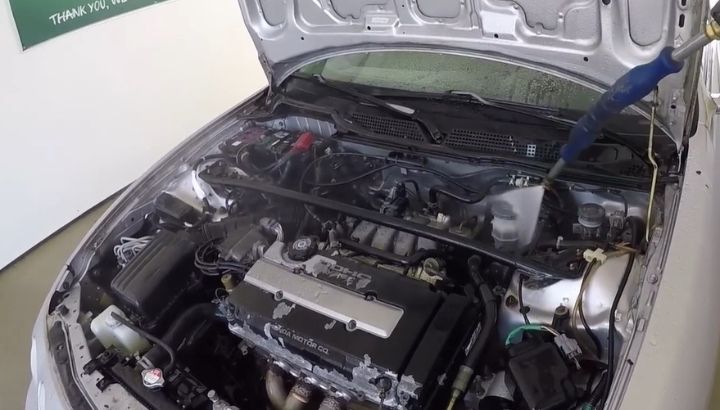
Skip the high-pressure wand. Cool the engine 60 minutes, disconnect the battery, bag the alternator and fuse box, use only the low-pressure soap and rinse settings from 3 feet away, and dry with shop towels before driving.
The DIY bay at your local self-serve carwash holds a 1,200 PSI sprayer designed to blast road grime off undercarriages. The same wand pointed at your Honda Civic alternator for 8 seconds buys you a $480 charging system repair. Knowing how to wash a car engine at the carwash safely separates the owner who saves $150 on detail shop pricing from the one writing a check to the dealer.
What Carwash Engine Cleaning Actually Means
Carwash engine cleaning is the process of using self-serve carwash bay equipment to clean the engine bay rather than a professional detail shop or your home garage. The approach uses pre-soak chemicals, low-pressure soap settings, and rinse functions available at most coin-operated facilities.
Most self-serve carwashes have settings labeled engine cleaner, pre-soak, soap, rinse, wax, and spot-free rinse. The engine cleaner setting dispenses an alkaline degreaser at low pressure, while soap and rinse settings vary in pressure depending on the location and equipment age.
A carwash engine bay clean costs $5 to $15 depending on time spent and chemicals used. The same job at a professional detail shop runs $80 to $200. Done correctly, the carwash approach delivers 80 percent of the result for 10 percent of the cost. Done incorrectly, the savings disappear into electrical repairs that cost more than 10 detail visits combined.
Why Most People Get This Wrong The First Time
Self-serve carwashes were designed for body and undercarriage cleaning, not engine bays. The defaults work against you unless you know how to override them.
High-Pressure Settings Drive Water Past Seals
The standard rinse setting at most carwash bays operates at 1,000 to 1,500 PSI. Modern engine bay seals on the fuse box, engine control module, ignition coils, and connector pigtails are rated for splash and rain, not pressure spray.
A 2018 Hyundai Sonata with the wand held 6 inches from the alternator for 5 seconds can suffer water intrusion into the brushes and slip rings. The damage often shows up 2 to 5 days later as a charging system warning light.
Aggressive Degreaser Damages Plastic And Rubber
Some carwash chemicals contain caustic alkaline cleaners that strip protective coatings off rubber hoses, plastic shrouds, and wire insulation. Repeated exposure dries out vacuum hoses, PCV hoses, and valve cover gaskets within 6 to 12 months.
The damage shows up as cracked hoses leaking vacuum, brittle plastic shrouds breaking when handled, and faded plastic that looks chalky. Choose carwash bays that use citrus-based or pH-neutral degreaser when possible.
Hot Engines Warp From Cold Water Spray
Cold carwash water hitting a 220°F exhaust manifold or engine block creates thermal shock that can crack cast iron or aluminum components. The damage is usually small fractures that grow over months until they cause leaks.
A driver pulling into a carwash 5 minutes after a highway run on a Ford F-150 with the 2.7L EcoBoost can crack the exhaust manifold or warp the turbocharger housing. Always wait 60 minutes minimum after driving before any engine cleaning.
Wet Connectors Cause Delayed Electrical Failures
Water that gets past sensor connectors and electrical pin housings causes corrosion that develops over weeks. The mass airflow sensor, oxygen sensors, crankshaft position sensor, and camshaft position sensor all sit in vulnerable positions.
Symptoms appear days after the wash including check engine lights, rough idle, misfire codes, and reduced fuel economy. The connection between the wash and the symptoms gets lost in the time delay, leading owners to blame other components.
Warning Signs Your Engine Needs Cleaning
Knowing when an engine bay actually needs washing prevents both unnecessary risk and unnecessary cost. Most engines need cleaning every 12 to 24 months, not weekly.
Heavy Oil Film Coating Multiple Surfaces
A black or brown oil film covering the valve cover, intake manifold, and inner fenders indicates accumulated oil mist that has baked into a coating. The film traps additional dust and forms a layer that hides leaks.
A 2015 Subaru Outback with valve cover lettering invisible under brown film has crossed into needing-clean territory. Cleaning reveals whether the valve cover gasket is actively leaking or whether the residue is old.
Caked Grease Around The Front Seal Or Oil Pan
Visible accumulated grease at the front timing cover, oil pan, or rear main seal area indicates active oil weeping that needs cleaning to diagnose properly. The cleaning lets you see the actual leak source.
Drivers in Texas dust country see grease accumulation faster than drivers in clean climates because the grease grabs and holds dust. A clean bay shows you exactly where leaks are starting before they become major.
Leaves And Debris Stuck In The Cowl
Maple, oak, and pine debris collected in the cowl drain at the base of the windshield holds moisture against metal surfaces. The trapped material accelerates rust on the firewall and surrounding brackets.
Drivers in Michigan, Ohio, and Pennsylvania see this fastest after fall leaf drop. A carwash cleanup removes the debris and unclogs cowl drains that would otherwise leak water into the cabin floorboard.
Salt Residue After Winter Driving
White crusty residue on engine bay surfaces after winter road salt exposure accelerates corrosion on the firewall, brake lines, and wiring connectors. Spring cleaning removes the salt before it does long-term damage.
Salt-belt drivers in Wisconsin, upstate New York, Ohio, and Pennsylvania benefit most from a thorough carwash engine clean every March or April. The 30-minute job at $10 prevents hundreds in corrosion damage over the vehicle’s life.
Mouse Droppings Or Nesting Material
Evidence of rodent activity including droppings, leaves, or shredded insulation requires immediate cleaning followed by deterrent installation. The cleanup also requires disinfection because mouse droppings carry diseases.
A Honda CR-V parked in a rural Iowa driveway often shows mouse evidence by November. Cleaning removes both the contamination and the scent markings that attract more rodents.
How To Diagnose Whether The Carwash Is The Right Choice
A 5-minute self-assessment tells you whether the carwash is the right approach for your specific situation. Wrong choice creates expensive problems.
Check Your Vehicle Age And Condition
Vehicles under 3 years old usually do not need engine bay cleaning. The factory protective coatings still work, and the bay stays relatively clean from light use.
Vehicles 5 to 15 years old benefit most from periodic cleaning because they have accumulated grime but still have functional electrical seals. Vehicles 20+ years old may have aged seals that fail under any pressure spray, making hand cleaning at home a safer choice.
Identify Sensitive Components Before Spraying
Locate the alternator, fuse box, engine control module (ECM), mass airflow sensor, ignition coils, and battery before approaching the carwash. Mark each component mentally so you know exactly what to cover and avoid.
A 2010 Toyota Tacoma has the alternator low and exposed, while a 2018 Ford F-150 has it positioned higher and partially shielded. Different vehicles need different protection strategies.
Choose The Right Type Of Carwash
Self-serve coin-operated bays at chains like Quick Quack, Mister Car Wash (DIY bays), or local independents offer the most control. Touchless automatic washes do not allow engine bay access. Tunnel washes never spray the engine bay.
Choose facilities with adjustable pressure settings if available. Some newer bays at premium facilities like Take 5 Car Wash offer engine cleaner as a specific menu option with appropriate pressure pre-set.
Verify The Engine Has Cooled Completely
Touch the upper radiator hose with your hand. A safe-to-clean engine has a hose that is cool to the touch. A hose that is even warm means more cooling time is needed before any water exposure.
The standard 60-minute cool-down rule prevents thermal shock damage. On 90°F+ days in Phoenix or Houston, extend cooling to 90 minutes. Most carwash trips happen after a quick errand, so plan to drive there, then leave the car for an hour before starting the wash.
Confirm Your Skill Level Matches The Risk
First-time engine bay cleaners should consider home cleaning before attempting carwash cleaning. The slower pace at home with a regular garden hose forgives mistakes that the carwash environment punishes.
Once you have done the home cleaning routine successfully 2 or 3 times, the carwash approach becomes a faster but riskier alternative. Confidence and component recognition are the prerequisites.
Step By Step Walkthrough To Wash Your Engine At The Carwash
The right sequence makes the difference between a clean bay and electrical damage. Follow each step before moving to the next.
Step 1: Cool The Engine For 60 Minutes Before Driving To The Carwash
Plan your trip so the vehicle has been parked for at least 60 minutes before any spraying. Driving directly to the carwash and starting immediately invites thermal shock damage.
The realistic approach is parking at home, doing other tasks for an hour, then driving the short distance to the carwash. Cooling continues during the drive if you keep speeds low. Confirm coolness by touching the upper radiator hose before starting.
Step 2: Pull Into The Self-Serve Bay And Disconnect The Battery
Park in the bay with the hood opening accessible to the wand. Loosen the negative battery terminal with a 10mm wrench and pull the cable off the post.
Tuck the cable aside so it cannot spring back during washing. Disconnecting the battery prevents accidental shorts if water bridges electrical contacts. Reconnecting takes 30 seconds at the end of the wash.
Step 3: Cover Sensitive Components With Plastic Bags
Wrap the alternator, the air filter intake opening, the fuse box, the ECM if exposed, and any visible connectors with plastic grocery bags or press and seal cling film. Secure each cover with masking tape or rubber bands.
Bring 4 to 6 plastic bags and a roll of tape from home because most carwashes do not provide them. The 5-minute investment prevents 90 percent of carwash-related electrical damage. Do not skip this step even if you are confident in your spray control.
Step 4: Brush Off Loose Debris Before Adding Water
Use a soft-bristle brush to sweep loose leaves, dirt, and dust out of the cowl, battery tray, and engine bay corners. Bring a brush from home or use a clean rag for this step.
Removing loose debris before water exposure prevents wet leaves from clogging drains and turning dust into a paste. The 2-minute step saves 5 minutes of frustration during the actual washing.
Step 5: Apply The Engine Cleaner Or Pre-Soak Setting From 3 Feet Away
Set the carwash dial to engine cleaner or pre-soak if available. Stand 3 feet back from the engine bay and spray the cleaner working top-down. Cover the valve cover, intake plenum, plastic shrouds, and inner fenders.
Avoid spraying directly into electrical connectors or the alternator vents. Let the cleaner dwell for 1 to 2 minutes maximum because dried cleaner causes streaking. Total cleaner time should not exceed 60 seconds of active spraying.
Step 6: Use Low-Pressure Soap Setting If Available
If the bay has a separate soap setting at lower pressure than the rinse, use it as a secondary cleaning step. The lower pressure is safer for electrical components than the rinse setting.
Stand 3 to 4 feet from the engine bay and work top-down. Avoid the alternator, fuse box, and any uncovered electronics. Soap dwell time of 1 minute is sufficient to lift remaining grease before rinsing.
Step 7: Rinse At Maximum Distance With Lowest Available Pressure
Switch to the rinse setting and stand 4 to 6 feet from the engine bay. The increased distance reduces effective pressure dramatically while still removing soap residue.
Rinse top-down, keeping the stream away from the alternator, fuse box covers, and any exposed connector. Total rinse time should be 30 to 60 seconds. Longer rinsing increases water intrusion risk without improving cleaning.
Step 8: Dry The Bay Thoroughly Before Driving
Pull the vehicle out of the bay and use clean microfiber towels or absorbent shop rags to remove standing water from the valve cover, plastic shrouds, and battery tray. Bring 4 to 6 towels from home.
Open the hood fully and let the bay air-dry for 15 to 20 minutes if temperatures permit. Remove the plastic bag covers, reconnect the negative battery cable, and start the engine briefly to verify normal operation before driving home.
Real Driveway Story From An Owner In Tulsa
A reader with a 2014 Chevy Equinox at 109,000 miles in Tulsa, Oklahoma decided to clean a heavily soiled engine bay before selling the vehicle. He researched options and chose the local self-serve carwash for the lower cost compared to a $145 detail shop quote.
He prepared by buying a $4 pack of plastic bags and a roll of masking tape from his garage. He cooled the engine for 90 minutes, drove the 8 miles to the carwash, and started the prep routine in the bay.
He disconnected the battery, bagged the alternator and fuse box, and brushed loose debris before adding any water. The wash itself took 12 minutes including engine cleaner, soap, and rinse cycles. Total bay rental cost was $11 for 15 minutes.
After drying with shop towels and air drying for 20 minutes, he reconnected the battery and started the engine. No warning lights appeared and the engine ran normally. He drove home and parked the vehicle with the hood open for another hour to fully dry.
The total cost was $15 versus a $145 detail shop quote. The savings of $130 plus the 30 minutes saved versus driving across town to a detail shop made the carwash approach clearly worth the small amount of preparation required.
When The Carwash Approach Will Not Work For You
Some situations make carwash cleaning a poor choice regardless of skill level. Knowing the limits prevents expensive mistakes.
Vehicles With Aftermarket Electronics
Vehicles with aftermarket sound systems, custom lighting, alarm systems, or other electronics installed in the engine bay face higher water intrusion risk. The aftermarket connections rarely have the weatherproofing of factory components.
A modified Toyota Tacoma with custom off-road lights, winch wiring, and dual battery setup needs hand cleaning at home with a regular garden hose. The lower pressure protects the aftermarket electrical work.
Older Vehicles With Aging Seals
Vehicles 20+ years old often have aged rubber seals on the fuse box, ECM, and connectors that no longer hold pressure or even moderate splash. The carwash environment exceeds their tolerance.
A 2003 Ford Ranger or 2002 Honda Accord that has not been cleaned in years needs a careful hand wash at home rather than carwash spray. The reduced pressure prevents seal failures that cause electrical gremlins.
Vehicles With Exposed Distributor Caps
Older vehicles with traditional distributor ignition systems are particularly water-sensitive. Water inside a distributor cap causes hard starts, misfires, and rough idle that can last hours.
A pre-2005 Toyota Tacoma, 1990s Jeep Cherokee XJ, or older Chevy Silverado with distributor ignition needs the cap covered thoroughly or skipped from carwash cleaning entirely. Hand cleaning at home with no water near the distributor is safer.
Direct Injection Engines With Carbon Issues
Cleaning the engine bay does not address carbon buildup on intake valves of direct injection engines like the Hyundai Theta II, Ford EcoBoost, or Honda 1.5T. Bay cleaning is purely cosmetic on these vehicles.
Internal carbon issues require walnut blast service at $300 to $500 every 60,000 to 80,000 miles. Spending money on aggressive bay cleaning while ignoring internal carbon is misallocated effort.
New Vehicles Under 5,000 Miles
Brand new vehicles already have clean engine bays from the factory. Spraying degreaser on factory protective coatings can strip wax-like finishes that protect new components.
Wait until the first 5,000 to 10,000 mile service interval before any aggressive bay cleaning. The factory coatings provide better protection than anything you can apply afterward.
Symptom To Cause To Fix Reference Table
| Symptom After Carwash | Most Likely Cause | Action To Take | Cost |
|---|---|---|---|
| Check engine light appears | Wet sensor or connector | Let dry 24 hours, disconnect battery 15 min | Free if it clears |
| Charging system warning light | Water in alternator | Inspect and possibly replace alternator | $200 to $600 |
| Rough idle for first few minutes | Water in spark plug wells | Drive to evaporate, recheck after 50 miles | Free usually |
| Engine cranks but won’t start | Wet distributor cap or coils | Dry components, may need replacement | $0 to $400 |
| Misfire codes after wash | Water at ignition coils | Replace coil packs if water-damaged | $40 to $200 |
| Battery dies overnight | Wet fuse box causing parasitic draw | Inspect fuse box, dry connections | $0 to $300 |
| Steering or brake assist warnings | Wet electrical connector | Disconnect, dry, reconnect | Free to $100 |
| Strong smell during first drive | Water hitting hot exhaust | Normal, should clear in minutes | Free |
| Visible water still pooled in bay | Inadequate drying | Dry thoroughly, run engine briefly | Free |
| Cosmetic streaks on plastic | Dried cleaner residue | Hand-clean affected areas with water | Free |
Tools And Supplies To Bring From Home
Carwashes do not provide the supplies you need for a safe engine wash. Bringing $5 in materials prevents most problems.
Plastic Bags For Component Coverage
Bring 6 to 8 plastic grocery bags or 10 to 15 sandwich bags for covering the alternator, fuse box, air intake, and any exposed electronics. Press and seal cling film at $4 a roll provides better waterproofing than bags.
The bags or wrap go on before any water hits the engine bay. Secure each cover with masking tape, rubber bands, or twist ties. Total cost is $0 to $5 if you reuse bags from home.
Masking Tape Or Painters Tape
A roll of masking tape at $3 to $6 from any hardware store secures the bag covers and helps create temporary seals around connectors. Frog Tape at $7 a roll offers better adhesion in damp conditions.
The tape attaches to clean dry surfaces before water exposure. Removed cleanly after washing without leaving residue. One roll lasts dozens of carwash trips.
Soft Bristle Brush For Pre-Cleaning
A detailing brush at $5 to $10 from any auto parts store sweeps loose debris before water touches the bay. Chemical Guys brushes or generic Amazon detailing brushes work well.
Avoid wire brushes anywhere near aluminum surfaces because the bristles scratch finishes. Soft natural or synthetic bristles handle 90 percent of the pre-cleaning work without damage.
Microfiber Towels For Drying
Bring 4 to 6 microfiber towels for drying the engine bay after washing. Dollar store towels at $1 each work fine for engine bay use, while premium options like The Rag Company at $4 each absorb more water.
Total towel investment of $5 to $20 lasts dozens of cleaning sessions. The towels dedicate to engine bay use should not be used elsewhere because they accumulate grease that transfers to other surfaces.
Comparison Of Engine Cleaning Methods
| Cleaning Method | Cost | Time | Risk Level | Best For |
|---|---|---|---|---|
| Self-serve carwash bay | $5 to $15 | 30 minutes | Moderate with prep | Experienced DIY owners |
| Home garden hose wash | $0 to $20 supplies | 45 minutes | Low | First-time engine bay cleaning |
| Detail shop service | $80 to $200 | 1 hour drop-off | Very low | Owners short on time or skill |
| Steam cleaning shop | $150 to $300 | 1 to 2 hours | Low | Heavily neglected bays |
| Touchless automatic carwash | Not applicable | N/A | N/A | Does not clean engine bay |
| Tunnel carwash | Not applicable | N/A | N/A | Does not access engine bay |
| Mobile detail service | $100 to $250 | 1 hour at home | Very low | Convenience priority |
| Quick spray-only bay | $3 to $8 | 10 minutes | High without proper prep | Light maintenance only |
Mistakes That Turn A $10 Wash Into A $500 Repair
Several common errors during carwash engine cleaning cause expensive problems. Avoiding these mistakes preserves both the engine and your savings.
Using The Direct Spray Setting Up Close
Holding the wand 6 inches from any component drives 1,000+ PSI water past seals designed for splash protection. The damage often shows up days later as electrical gremlins.
Always stay at least 3 feet back from any engine bay component. The reduced effective pressure cleans without forcing water past seals. Closer spraying gains nothing in cleaning effectiveness while greatly increasing damage risk.
Skipping The Battery Disconnect
A connected battery during carwash spraying gives any stray water a path to short two circuits together. Even modern sealed fuse boxes can wick water past their rubber gaskets at carwash pressures.
Two minutes with a 10mm wrench prevents fried fuses, tripped airbag lights, or wiped-out infotainment systems. The disconnect is non-negotiable for carwash engine cleaning.
Spraying Hot Engines Or Components
Hot engine bay surfaces hit by cold carwash water can crack within seconds. The exhaust manifold, turbocharger housing, and even plastic shrouds are vulnerable.
Always wait 60 minutes minimum after driving. The cooling time is not optional. A cracked exhaust manifold replacement runs $400 to $1,200 depending on the engine.
Letting Cleaner Dry On The Surface
Carwash cleaners left to dry create streaks, etch plastic, and leave chalky residue that requires more cleaning to remove than the original dirt. The 1 to 2 minute dwell rule exists for a reason.
Work in sections matching the bay’s dispenser cycle. Rinse before the cleaner dries completely. On hot summer days, work faster because cleaner dries faster. Never apply cleaner to a sun-baked engine bay.
Ignoring The Drying Step
Standing water in connectors, spark plug wells, and around the throttle body causes rough starts, misfire codes, and check engine lights that take days to clear.
A handful of microfiber towels and 15 minutes of air drying clears 90 percent of trapped water. Skipping drying is what makes owners blame engine cleaning for problems they actually caused through inadequate finishing.
Choosing The Wrong Carwash Bay
Some carwash bays use harsh industrial chemicals or have older equipment with limited pressure control. The wrong facility increases damage risk regardless of your skill level.
Choose facilities with adjustable pressure settings, citrus-based or pH-neutral cleaners, and clean equipment. Older neighborhood carwashes with worn equipment are not the right choice for engine bay work.
How To Maintain A Clean Engine Bay Between Washes
Regular maintenance reduces the need for aggressive cleaning. Building habits prevents the buildup that requires aggressive cleaning to remove.
Brush Off Debris At Every Oil Change
Every 5,000 to 7,500 miles when you change oil, take 5 minutes to brush loose dust and debris from the cowl, valve cover top, and battery tray. The simple maintenance prevents film buildup between full washes.
A clean detailing brush stored in your garage costs $5 and lasts a decade. The 5-minute habit at every oil change keeps the bay 80 percent cleaner than ignoring maintenance.
Wipe Down Surfaces Quarterly
Every 3 months, wipe accessible surfaces with a damp microfiber towel. The light cleaning prevents oil mist from baking into a permanent film.
This 10-minute habit costs nothing if you use existing supplies. The continuous prevention is far easier than aggressive cleanup of accumulated grime.
Address Leaks Within 30 Days Of Discovery
A small valve cover gasket weep that costs $50 to fix today becomes a baked-on tar coating that takes hours to clean if ignored for 6 months.
Addressing leaks promptly keeps the bay easy to maintain. The diagnostic value of a clean bay only works if you fix what the cleaning reveals.
Apply Trim Dressing Every 6 Months
A water-based trim dressing like 303 Aerospace Protectant, Chemical Guys VRP, or CarPro PERL restores plastic finishes and prevents UV damage. The protectant repels future dust accumulation by 40 to 60 percent.
A 16-ounce bottle costs $12 and lasts 8 to 10 applications. The $1.20 per treatment investment maintains the look of a fresh bay between deep cleanings.
Park Strategically To Reduce Contamination
Parking under trees in fall, near construction sites, or on dusty rural roads accelerates engine bay contamination. When possible, park in covered or sheltered locations to slow accumulation.
A driver in suburban Springfield, Missouri who parks in a garage versus under a maple tree typically sees 50 percent less engine bay debris over a year. The simple choice costs nothing and reduces cleaning frequency.
Frequently Asked Questions
Is It Safe To Wash A Car Engine At A Self-Serve Carwash?
Washing a car engine at a self-serve carwash is safe if you take proper precautions including 60-minute engine cooling, battery disconnection, plastic bag covers on the alternator and fuse box, and maintaining at least 3 feet between the wand and engine components.
Without these precautions, the high-pressure spray can drive water past electrical seals and cause damage costing $200 to $1,500 to repair. Skip the high-pressure rinse setting if possible and use only the soap and engine cleaner settings, which usually run at lower pressure. The total investment is about $5 in supplies plus the bay rental fee, far less than a detail shop charging $80 to $200 for the same work.
What Pressure Setting Should I Use For Engine Bay Cleaning?
Use the lowest available pressure setting at the carwash for engine bay cleaning. The engine cleaner, pre-soak, or soap settings usually operate at 200 to 500 PSI, which is safe for engine bay components when used properly.
The high-pressure rinse setting at 1,000 to 1,500 PSI should be avoided when possible or used only at maximum distance of 4 to 6 feet from the engine. Some premium carwashes have specific engine bay settings that pre-set safe pressure. If your carwash only has high-pressure rinse, hold the wand at maximum distance and limit rinse time to 30 seconds total. Always cover sensitive electronics regardless of pressure setting.
How Long Should I Let The Engine Cool Before Carwash Cleaning?
Let the engine cool for at least 60 minutes before any carwash cleaning. The cooling time prevents thermal shock damage that can crack the exhaust manifold, turbocharger housing, or engine block when cold water hits hot metal.
Touch the upper radiator hose to verify safe temperature. The hose should feel cool to the touch, not warm. On hot summer days in Phoenix or Houston at 95°F+, extend the cooling to 90 minutes. The realistic approach is parking the vehicle, doing other tasks for an hour, then driving the short distance to the carwash. Driving directly to the carwash and starting immediately is the most common cause of carwash-related engine damage.
Can I Use The Touchless Carwash For The Engine Bay?
Touchless and tunnel carwashes do not clean the engine bay. The wash equipment only contacts the exterior body, glass, and undercarriage. Engine bay cleaning requires self-serve bay access where you control the wand directly.
Some touchless carwashes offer optional undercarriage wash as an add-on, but this only sprays the underside of the vehicle, not the engine compartment. Engine bay cleaning specifically requires you to open the hood and direct cleaner and rinse to the engine bay surfaces. Use a self-serve coin-operated bay or a DIY bay at chains like Quick Quack or Mister Car Wash, which usually offer both touchless and DIY options.
What Should I Cover Before Spraying The Engine Bay?
Cover the alternator, fuse box, engine control module if exposed, mass airflow sensor, ignition coils or distributor cap on older vehicles, the air filter intake opening, and any aftermarket electronics. Use plastic bags secured with masking tape or rubber bands.
The bags do not need perfect waterproofing because a few stray drops will not hurt sealed components. The goal is blocking direct spray rather than achieving submersion-proof sealing. Bring 4 to 6 plastic bags and a roll of tape from home because most carwashes do not provide them. Total prep time is 5 minutes and prevents 90 percent of carwash-related electrical damage.
What If My Check Engine Light Comes On After The Wash?
A check engine light after carwash engine cleaning usually means water reached a sensor or connector. Let the vehicle dry for 24 hours with the hood open, then disconnect the battery for 15 minutes to reset the system.
Most water-related codes clear themselves within 50 to 100 miles of normal driving as the moisture evaporates. If the light persists, scan the codes with an OBD2 scanner to identify the specific sensor. Common water-related codes include P0102 (mass airflow sensor), P0301-P0308 (cylinder misfires), and P0420 (catalytic converter efficiency). Most resolve without parts replacement once everything dries thoroughly.
How Often Should I Wash My Engine Bay At The Carwash?
Wash your engine bay every 12 to 24 months for typical daily drivers. Vehicles in dusty, muddy, or salty conditions benefit from cleaning every 6 to 12 months. New vehicles under 3 years old usually do not need engine bay cleaning at all.
A driver in suburban Indianapolis, Indiana with garage parking and clean roads can go 24 months between cleanings. A driver in rural Iowa with gravel roads and outdoor parking needs cleaning every 6 months. Salt-belt drivers should clean every spring after winter road salt exposure. The frequency depends on accumulation rate, not calendar age.
Will The Carwash Damage My Plastic Engine Cover?
The carwash should not damage your plastic engine cover if you use proper technique. The cover is designed to handle rain, splash, and engine bay heat, all of which exceed normal carwash conditions when used properly.
The risk increases when you spray cleaners directly at the cover from close range with high pressure. Maintain 3+ feet distance and use moderate pressure settings. Avoid leaving cleaner to dry on the cover because some chemicals etch plastic surfaces. After cleaning, apply a UV protectant like 303 Aerospace Protectant at $12 to maintain the cover finish and prevent fading. The protectant adds 6 months of protection between applications.
Do I Need Special Cleaner For The Carwash Engine Bay?
You do not need to bring special cleaner to the carwash because the bay provides degreaser through the engine cleaner or pre-soak setting. Most carwash chemicals are designed for general vehicle cleaning and work adequately for engine bays.
If you want better results, bring a small spray bottle of CRC Engine Degreaser at $7 or Simple Green Pro HD at $5 diluted 1:5 with water. Apply your home cleaner before activating the carwash bay, then use the carwash rinse to remove it. The combination works better than relying solely on carwash chemicals. Always test new cleaners on small areas first to verify they do not damage your specific vehicle’s plastic or rubber components.
Conclusion
Knowing how to wash a car engine at the carwash safely comes down to one rule: keep distance and respect the pressure. Cool the engine, disconnect the battery, bag the alternator and fuse box, and stand 3 feet back. Skip the high-pressure rinse when possible. The owner who follows these steps walks away with a clean Toyota Corolla, Honda Civic, F-150, or Subaru Outback for $10 instead of paying $150 at the detail shop. The discipline is worth more than the savings.